Every business is discussed in its absence. Customers compare notes, candidates ask around, partners and investors search before they ever pick up the phone. The only real question is whether your business has taken an honest part in shaping what those people find — or whether the record was written entirely by others. Public relations is the discipline of taking that part: earning understanding and credibility among the people whose decisions affect you. So why do you need PR? Because decisions about your business are being made on the strength of information you either helped to publish, or didn’t.
This article answers the question for a business of any size. It separates PR from its neighbours — advertising, marketing in general, and the press release, which is only one of its tools — then works through the jobs PR actually does: being understood, earning credibility through other voices, building a visible record that compounds, and holding a reputation in place before a crisis tests it. It looks at the moments where PR earns its keep, the small-business version of it, what happens in its absence, who should do the work, and what good PR really costs. Where a press release fits inside a PR programme is a narrower question, and it has its own article; this one is about the wider need.
Table of Contents
What Public Relations Is — and What It Is Not
Public relations is the work of building and maintaining a fair understanding between an organisation and the people who matter to it, through earned attention and honest communication: media coverage, a public record of accurate information, relationships with journalists and communities, and a voice that can be found and trusted when it speaks. Done properly, it is not decoration on the business. It is the business explaining itself, repeatedly and in public, over the whole of its life.
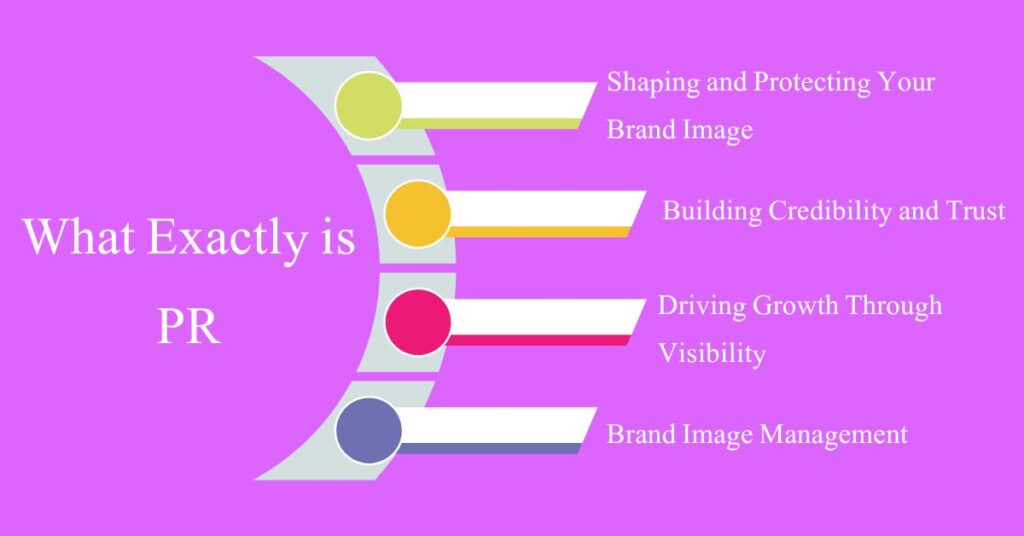
The boundaries matter as much as the definition. PR is not advertising: advertising buys space and controls every word in it, and audiences know that and discount it accordingly; PR earns attention it cannot dictate. It is not the whole of marketing: it is one discipline alongside advertising, content, and the rest, with its own job. It is not just press releases: a release is one instrument — the formal announcement — inside a much larger programme of relationships and record-keeping. And it is not spin: the attempt to make reality sound better than it is collapses on contact with journalists, employees and customers who can check, and the collapse costs more credibility than silence would have. Sustainable PR begins from what is true and makes it legible.
The Core Job: Being Understood by the People Who Matter
Strip the job to its essentials and PR exists so that specific audiences can answer three questions about you without help: who are you, what do you do, and can you be trusted? The audiences differ, and each asks in its own way. Customers deciding between near-identical offers look for signs of a real, accountable business. Partners and suppliers deciding whether to attach their name to yours do the same. Investors and lenders, considering money, treat public information as part of their diligence. Employees and recruits judge an employer by its reputation long before an interview. Regulators and policymakers form views of the companies they oversee. And the local community — neighbours, councils, the people around your premises — decides whether you are an asset or a nuisance, with consequences that surface at planning applications and in local coverage.
PR’s practical output is a public record that answers those audiences consistently: accurate descriptions of what the company does, its milestones on record, its people findable and quoted in their areas of expertise, its responses to events a matter of document rather than rumour. Without that record, every audience improvises its answer from fragments — a review here, a competitor’s claim there, an out-of-date listing somewhere else. With it, the important conversations about your business start several steps ahead, because the basic questions are already settled in your favour by evidence anyone can check.
Credibility You Cannot Buy Outright
Claims a business makes about itself are received the way all self-praise is received: politely, and with a discount. This is rational. The advertiser chose the words and paid for the placement; nothing in the arrangement tests whether the claims are true. Third-party voices work differently. A journalist who covers your announcement has applied independent judgement — including the judgement to refuse — and readers know it. A trade publication that profiles your work, a customer quoted by name, an industry body that cites your expertise: each carries weight precisely because it was not yours to command.
That independence is what PR is actually for. The work is to make the true and interesting things about the business visible to those independent voices in a form they can use: a genuine story, access to people who can speak with authority, evidence rather than adjectives. Coverage earned this way is slower to win and impossible to control outright — and that is exactly why it persuades where self-description cannot. A business that only ever talks about itself in its own channels is asking to be believed on its own word. A business with PR is regularly believed on other people’s.
Visibility That Compounds: The Archive Effect
Advertising has a clean property: it stops the day the spending stops. Earned visibility behaves more like an archive that keeps working. Each interview, profile, quoted comment and covered announcement joins a public record that goes on answering questions in your absence — when a prospect looks you up before a meeting, when a candidate checks whether you are real, when a journalist writing about your sector searches for who has spoken on the subject before. Over time the record itself becomes a reason for the next piece of coverage: journalists find the prior coverage, see a business that is part of the conversation, and come back.
This is also why PR rewards consistency over intensity. A single burst of attention fades into an archive of one; a modest, steady accumulation builds a results page and a reputation that look increasingly substantial to everyone who checks. None of this is a promise about search rankings or sales — it is simpler and more durable than that. It is the difference between being a business that can be looked into, and one that effectively has to introduce itself from nothing at every important moment.
Reputation Is Built Before You Need It
Every organisation eventually has a bad day: a failure, an accident, a complaint that goes public, a decision that angers people. When it arrives, the first question the world asks is what kind of business this already is — and the answer is whatever the existing record says. A company with accurate information already public, working relationships with the journalists who cover it, and a history of dealing straight tends to get a fairer hearing: its statement is carried, its corrections travel, its side is sought. A company starting from zero must build trust in the middle of the emergency, while under scrutiny, against a story that is already moving without it.
Be honest about the limits. Reputation is not a shield, and PR cannot rescue a business from a genuinely bad situation of its own making — the facts will decide, as they should. What prior PR buys is more modest and more valuable: the benefit of the doubt while facts are established, channels that already exist for putting them on record, and people — journalists, community figures, customers — who have a reason to listen before they conclude. Reputation, in other words, is an asset you hold before the day you need to spend it, and it cannot be manufactured on the day itself.
The Moments Where PR Earns Its Keep
PR runs continuously, but certain moments concentrate its value:
- A launch. An unknown product or service needs explanation and independent assessment, not just announcement; early coverage becomes the record everyone else checks.
- Funding and growth. Announcements of investment, expansion or results are read as diligence by future investors, partners and senior hires. A business whose growth is on the record looks different from one asking to be taken on trust.
- Hiring. Candidates research employers. Visible founders, quoted experts and a company that appears in its industry’s conversation are easier to join than a name nobody can place.
- Entering a new market. Where you have no local record, PR builds the first one — the coverage and relationships that make the second conversation easier than the first.
- Change. New leadership, a rebrand, an acquisition, a closure. Explained early and plainly, change is news; unexplained, it is a rumour with a head start.
- Bad news. A recall, an outage, a public complaint. The prepared organisation responds within hours with facts and a named voice; the unprepared one responds in days, to a story already settled.
PR for Small Businesses: A Smaller Stage, the Same Logic
Small businesses sometimes assume PR belongs to large companies, when in practice their version of it is often the most attainable. The stage is smaller — local and trade media rather than national — and on that stage the business is not a minnow. A local paper, a regional business journal or the trade title for your sector is read by exactly the people you need, and its journalists are reachable in a way national desks are not. The founder is the spokesperson, and founder visibility — a real person, with a name and a view — is something large competitors genuinely struggle to imitate.
Realistic scope matters more than ambition. A small business does not need a constant campaign; it needs a genuine story told well a few times a year, a short and current list of the local and trade contacts who matter — building and maintaining that list is covered in our guide to PR media lists — and its own facts kept accurate everywhere they appear. Judge the results by enquiries, relationships and the record you are building, not by vanity clippings. And be wary of buying theatre scaled for someone else: the right PR for a small business is proportionate, personal and patient.
What Happens Without PR
The alternative to PR is not silence — it is being described by others. Competitors’ framing becomes the default account of the market and, often, of you. The public record shrinks to whatever accumulates by accident: reviews, complaints, an old directory entry, a former employee’s account. Journalists working to deadlines use the material and voices that are available, so absence does not keep you out of the story; it keeps you out of your own story. At diligence moments the problem sharpens: an investor, partner or senior candidate who looks you up and finds little that is current draws a conclusion from the thinness itself. And if a crisis comes, it starts from zero — no relationships, no archive of goodwill, no spokesperson anyone has heard from before, at the precise moment all three are most needed. Doing nothing is also a communications strategy. It is simply the one where everyone else holds the pen.
Doing PR: In-House, Agency or Freelance?
In-house keeps knowledge and relationships inside the company, responds fastest, and improves with every story because the learning stays. Its costs are a senior salary for work that may not fill a week, and the limits of one person’s network and perspective. An agency brings breadth — established media relationships, several specialisms, capacity at peak moments — at retainer prices, with the standing risks that you are one client among many and that the agency must learn your business before it can represent it well. A freelance specialist often offers senior attention and flexibility at smaller scale, with capacity and continuity as the trade-offs if they are ill or busy elsewhere.
Many organisations blend the three: an internal owner who holds the record and the relationships, external help bought for launches and peaks. One distinction is worth keeping clear — a distribution service handles a single slice of the work, getting announcements out to media outlets, and is a tool inside a PR programme rather than a substitute for one. Within the programme itself, the humble press release does more than most people expect; our article on how a press release helps your public relations explains that supporting role. Whichever structure you choose, somebody must own the public record as a continuing responsibility. PR fails less often from lack of talent than from belonging to no one.
What Good PR Actually Costs: Effort Before Money
Asked what PR costs, people usually mean fees — which vary too much by market and scope for any honest figure to be given here. The costs that decide whether PR works are mostly not fees at all. They are senior time: a spokesperson who makes themselves available and approvable without a week of clearances. Consistency: showing up between announcements, not only at them. Raw material: shareable facts, customers willing to be quoted, expertise written down where journalists can find it. Patience: an archive and a reputation compound over quarters and years, and a programme judged after a month will always look like a failure. And honesty discipline: the refusal to overclaim, because PR’s entire value rests on being believed by people whose job is to check. Cheap PR that promises coverage regardless is expensive in the only currency that matters here — credibility with the journalists you will need again.
Signs You Need PR Now
- Competitors are quoted in the stories your business should be part of.
- People repeatedly misunderstand what your business does — including people trying to buy from you.
- Looking yourself up produces a thin, stale or entirely third-party record.
- You are hiring, and strong candidates have never heard of you.
- A launch, funding round or move into a new market is on the calendar.
- An issue is developing that could plausibly become public.
- Journalists contact you only when something has gone wrong.
Any one of these is a prompt. Several together mean the record is already being written without you.
FAQs About Needing PR
Do small businesses really need PR?
At a scale that fits them, yes. A small business needs the same things PR provides — to be understood, believed and findable by the people who matter — and its local and trade media are often more reachable than a large company’s national press. What it does not need is a large company’s programme. A few genuine stories a year, accurate facts everywhere, and relationships with the handful of outlets its customers actually read is PR, honestly sized.
Can’t I just advertise instead?
Advertising and PR do different jobs. Advertising rents attention and controls the message completely, which makes it fast, predictable and clearly labelled as bought. PR earns independent attention and builds the public record, which makes it slower and less controllable but more persuasive and more durable. Most businesses that communicate seriously use both, for different purposes; treating them as substitutes usually means doing one of the two jobs badly.
How long before PR shows results?
A strong story can earn coverage quickly; the deeper results — the archive, the relationships, the reputation that changes how diligence and crises go — compound over months and years. Anyone who promises coverage by a date, or a reputation by a quarter, is overselling what PR can honestly commit to. Judge a programme by whether the record is growing and the right conversations are starting, not by a deadline.
Conclusion
Why do you need PR? Because the decisions that shape a business — to buy, to partner, to invest, to join, to trust — are made by people who look you up, ask around and read what others have said, and PR is how a business takes an honest part in what those people find. The importance of public relations is easy to underestimate in quiet times, when being unknown merely costs opportunities, and impossible to overestimate on the one loud day when a reputation has to be spent. The businesses that fare best on that day are the ones that treated PR as ordinary maintenance, done early and done steadily: a record built, relationships kept, a story worth repeating — long before they needed any of it.